CRANE STUDIES
In Crane Studies, Mikkel Due Andersen turns his lens toward one of nature’s most graceful yet elusive creatures — the crane. Known for its slow movements and haunting calls, the bird becomes in Andersen’s photographs both a symbol of solitude and a portrait of wild harmony. His images capture the threshold between stillness and flight, between silence and sound — moments where the landscape seems to breathe with the rhythm of the birds.
Rather than focusing on perfect form, Andersen seeks the fragile transitions: a wing half-lifted, mist curling around the body, a reflection dissolving in shallow water. The cranes appear both monumental and ghostlike, suspended between presence and disappearance. In this way, Crane Studies is less about documenting a species than about observing the choreography of distance — the quiet poetics of coexistence.
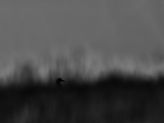
One of the central works in the series depicts a solitary blue crane emerging through layers of dawn mist. The bird seems almost dissolved into the air around it — a figure of stillness adrift in shifting light. The image blurs the line between subject and atmosphere, evoking both melancholy and transcendence; it feels less like a photograph and more like a memory returning from the fog.
Technically, the series is defined by an interplay of patience, light, and atmosphere. Andersen often photographs at dawn or dusk, when the low light softens contours and time itself seems to stretch. Using long focal lengths and deliberately slow shutter speeds, he captures not only the physical motion of the cranes but also the lingering trace of their passage — the blur of a wing, the tremor of reflected sky. Exposure becomes a form of listening; the camera translates movement into breath.
Through this approach, the images inhabit a space between realism and reverie. They invite us to see the cranes not merely as birds, but as extensions of the landscape — fleeting embodiments of rhythm, balance, and longing. Crane Studies reminds us that beauty in nature is never static; it exists in the tension between flight and fall, appearance and vanishing.